
Minor Arcana · Cups · Five
Five of Cups Tarot Card Meaning
Grief, disappointment, regret, emotional loss, mourning, changed expectations, and the gradual recognition that not everything has been lost.
Five of Cups
Read it at a glance
The Five of Cups asks what deserves to be mourned—and what is still waiting to be carried forward.
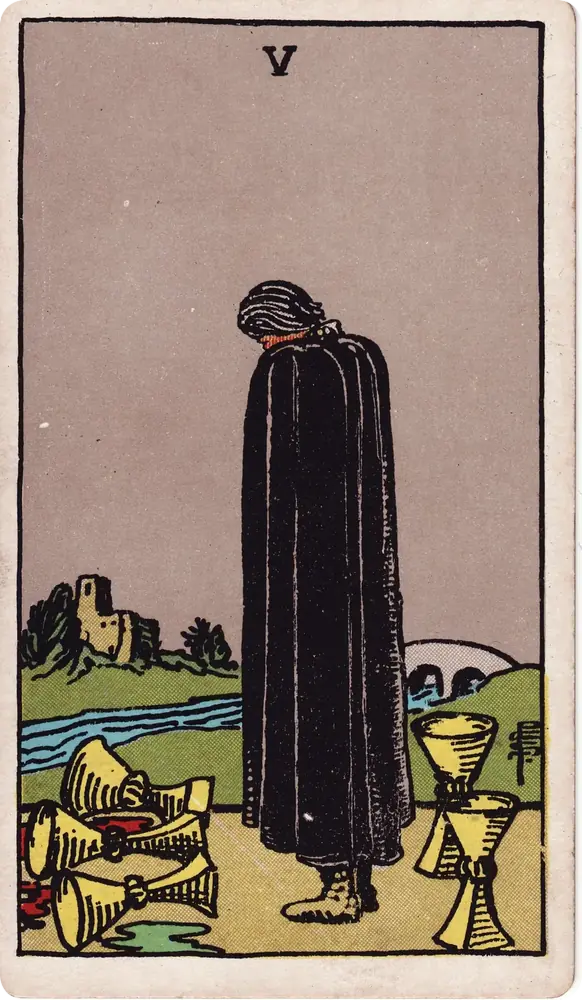
Explore the Cups suit and emotional processing →The Five of Cups is the emotional aftermath of a loss. A cloaked figure faces three spilled cups while two remain standing behind them. The card does not minimize grief or rush toward optimism. It shows that mourning and possibility can occupy the same landscape before the grieving person is ready to turn around.
The Five of Cups Upright Meaning
Upright, the Five of Cups represents disappointment, heartbreak, regret, mourning, and the painful difference between what was hoped for and what occurred. An emotional investment may have been lost, changed, or proven unable to continue in its previous form.
The card validates sorrow, but it also observes how attention works. When loss fills the entire field of vision, remaining love, support, knowledge, and future possibility may become temporarily invisible. Healing does not require pretending the cups never spilled; it requires eventually recognizing that the story contains more than the spill.
The Symbols on the Five of Cups Tarot Card
Every major part of the image shows a different relationship to loss: what is gone, what remains, and the route toward another place.
The black cloak and bowed figure
The heavy garment gives grief privacy and weight. The figure’s posture shows attention narrowed by sorrow, regret, or self-reproach.
The three spilled and two standing cups
Three vessels empty onto the ground while two remain intact. The arrangement distinguishes irreversible loss from resources that have survived.
The bridge, river, and distant home
A bridge crosses the emotional water toward shelter. Recovery requires movement, but the route already exists even before the figure turns to see it.
The river separates the present grief from the distant structure without making passage impossible. The card respects timing: the bridge is available, but no one can force the mourner across it before the loss has been acknowledged.
Explore the Cups suit and emotional processing →
The Five of Cups in a Love Reading
In love, the Five of Cups can describe heartbreak, regret, betrayal, disappointment, separation, or grief over what a relationship failed to become. Someone may be focused on mistakes and unable to recognize what can still be repaired or learned.
The two standing cups can indicate a surviving bond or future emotional resources, but they do not automatically promise reconciliation. Regret is a feeling; repair requires accountability, communication, and changed behavior.
The Five of Cups as Feelings or Intentions
As feelings, the Five of Cups suggests sadness, remorse, longing, disappointment, guilt, or fixation on the past. Someone may miss you while also feeling unable to undo what happened.
As intentions, it can show mourning rather than action. A person may want forgiveness or another chance, but the surrounding cards must show whether they are prepared to cross the bridge between regret and repair.
The Five of Cups in Money and Career
For career, the Five of Cups can mark a failed project, rejection, lost role, disappointing outcome, or regret about a professional decision. Review what the experience cost without treating one setback as the definition of your ability.
For money, it may indicate a loss or expense that changes expectations. Take inventory of what remains, seek practical support, and make the next decision from current facts rather than shame.
The Five of Cups Reversed Meaning
Reversed, the Five of Cups often shows acceptance, forgiveness, emotional recovery, and the gradual willingness to rejoin life. The loss remains part of the story, but it no longer controls every interpretation of the future.
In a more difficult expression, it can indicate grief that has become stuck or repeatedly reopened. Support may be needed to process what cannot be solved through willpower alone.
The Five of Cups as Advice
Mourn what was genuinely lost. Then, when you are able, turn toward the two cups that remain and the bridge that can carry you into a life shaped by the loss but not permanently confined to it.
Is the Five of Cups a Yes or No?
The Five of Cups is usually a no to the outcome as originally imagined. It does not say that healing, repair, or another meaningful future is impossible.
Continue with Four of Cups or Six of Cups, then explore the complete Cups suit guide and all tarot card meanings.
Virtual tarot readings · Wherever you are
Ready to see what the cards are saying to you?
Choose a live reading by Zoom, FaceTime, or phone—or select an email reading delivered privately to your inbox.Cancellation Policy
Please note that you may change or cancel your appointment at any time up to 24 hours ahead of your appointment time by clicking the link in your confirmation email. Cancellations made more than 24 hours ahead of your appointment time are 100% refunded.
If you wish to change your appointment less than 24 hours ahead of your time, please email info@tarot.nyc and we will assist you. Appointments canceled less than 24 hours ahead of your appointment time will receive a 50% refund.
There is no refund for missed appointments or no-shows.
Frequently Asked Questions About the Five of Cups
Does the Five of Cups mean reconciliation?
It can show regret and a surviving emotional bond, but reconciliation requires additional cards showing communication, accountability, and action.
Does the Five of Cups mean cheating?
No. It represents disappointment or emotional loss but does not identify the cause without supporting evidence.
What does the Five of Cups mean as feelings?
It suggests sadness, remorse, longing, guilt, grief, or disappointment focused on what has happened.
What does the Five of Cups mean as a person?
It may describe someone grieving, regretful, pessimistic, emotionally preoccupied, or beginning the work of acceptance.